
If your factory floor still runs on forklifts and manual effort for every heavy lift, you’re probably losing more time than the numbers show. EOT cranes fix that not by being fancy, but by being fundamentally better positioned.
An Electric Overhead Travelling (EOT) crane rides on rails fixed to the building structure, moving loads across the full span of a bay. No floor space consumed. No machines blocking aisles. Just repeatable, controlled lifts that happen overhead while everything else on the floor keeps moving.
What an EOT Crane Actually Does Differently
Most facilities start with forklifts or manual hoist. Both work fine until loads get heavier, shifts get longer, or the floor gets more congested. That’s usually when the real cost of undersized material handling shows up.
EOT cranes handle loads from a few hundred kilograms to several hundred tonnes, depending on its configuration. They travel the full length of a workshop bay without interrupting anything below them. That vertical clearance is the practical advantage: the entire floor stays free for production.
Two configurations handle most industrial work:
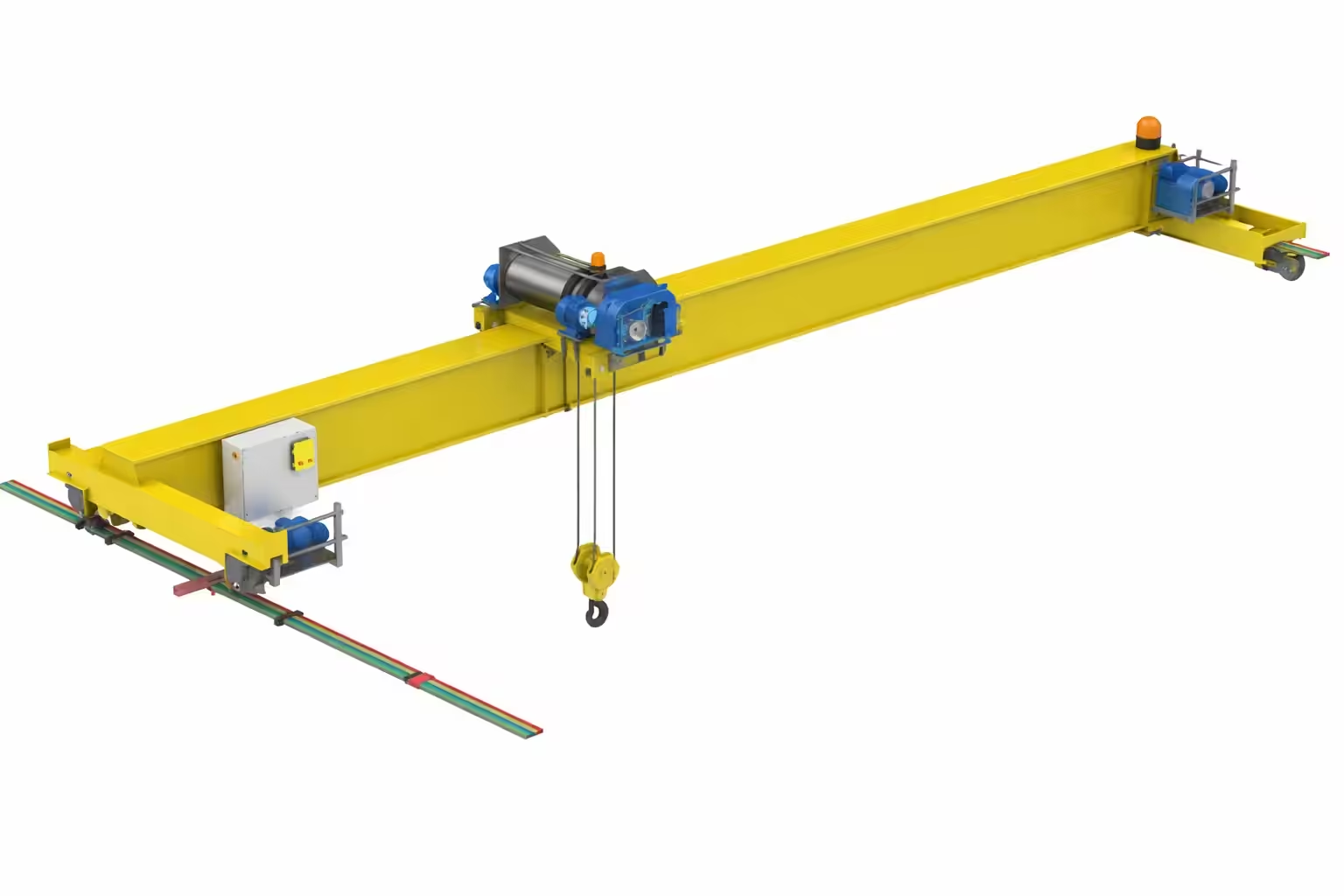
Single Girder EOT Cranes use one horizontal beam and suit lighter to medium loads typically up to 20 tonnes. They’re compact and work well in facilities where headroom is tight.
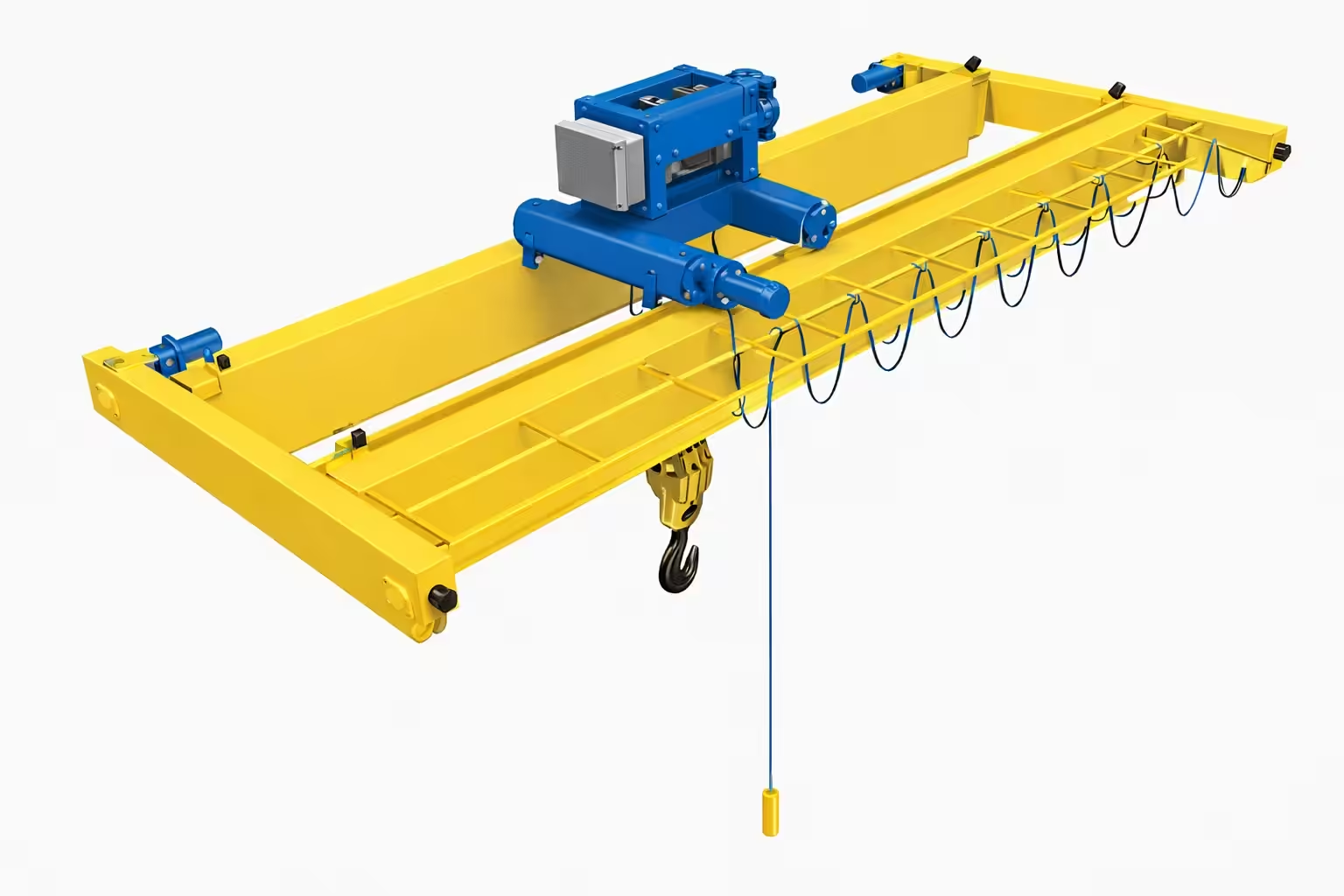
Double Girder EOT Cranes handle heavier loads and give greater hook height. The hoist travels on top of the girders rather than hanging below, so you recover vertical clearance. Steel plants, fabrication shops, and heavy engineering facilities almost always use these.
Where the Productivity Gains Actually Come From
Faster material movement one crane positioned well can serve multiple workstations in a single bay across a full shift. A forklift working the same floor can’t do that without creating traffic.
Workers don’t wait with the crane running overhead, floor-level operations continue independently. That elimination of stop-and-wait cycles adds up fast across shifts.
Fewer incidents, less downtime – Moving heavy loads with equipment that isn’t rated for the job is where injuries happen. A properly spaced EOT crane removes that risk from the floor. Fewer incidents means fewer unplanned stoppages.
Precision placement – Variable-frequency drives and good control systems let operator’s position loads accurately. That matters in assembly lines, mold shops, and anywhere a few millimetres of error costs time.
Reliable across shifts – Modern EOT cranes with radio or pendant controls work consistently at night and on weekends without the fatigue-related errors that affect manual handling.
Picking the Right Configuration
The wrong crane wastes capital. Specifying the right one starts with a few hard numbers: the heaviest load you’ll ever lift (not the average the worst case), the bay span, required hook height, and how many cycles per day you expect.
Duty cycle is the thing people underestimate most. A light-duty rated crane running eight hours a day will fail early. Getting the duty class right during specification is cheaper than replacing components two years into service.
For most manufacturing and warehouse applications, a single girder crane in the 3 to 15-tonne range covers the majority of requirements. For foundries, press shops, or any facility handling steel coils, heavy plates, or castings double girder at the appropriate duty class is the practical answer.
Keep the Maintenance Schedule
Even a well-built crane becomes unreliable without upkeep. Rails need periodic alignment checks. Brakes need inspection. Hoist ropes and chains have defined replacement intervals that exist for real reasons.
Facilities that build maintenance into operations from day one before the first breakdown routinely get 20+ years from their cranes. Facilities that don’t are usually on their second or third rebuild by then.
FAQ
EOT stands for Electric Overhead Travelling. It refers to a crane that works on an elevated rail mechanism and operates on electrical power making it practical for continuous industrial use across shifts.
- Single girder cranes use one beam and handle lighter loads, typically up to 20 tonnes
- Double girder cranes use two beams, carry heavier loads, and deliver greater hook height.
For heavy-duty environments like steel plants or press shops, double girder is almost always the right call.
With correct duty-class selection and regular maintenance, 20 to 25 years is a reasonable service life. Most premature failures trace back to an undersized duty rating or skipped maintenance not material failure.
Yes, in most cases. EOT cranes can be installed on existing structures if the building can support the combined weight of the crane and its rated load. A structural assessment before installation is always worth doing.
- Steel plants
- automobile manufacturers
- heavy fabrication workshops
- foundries
- warehouses
- shipyards
- power plants
Are the most common users.
Any facility regularly lifting loads that exceed what forklifts handle efficiently is a practical candidate.
Conclusion
EOT cranes aren’t reserved for large plants. They’re a sensible productivity tool for any facility that moves heavy loads on a regular schedule. The difference shows in throughput, floor utilization, safety records, and the physical wear on workers over time.
If you’re specifying material handling equipment for a new facility or upgrading what you have, AVREX International supplies single girder, double girder, and Goliath (gantry) crane solutions backed by 45+ years of industrial experience. Their team works through actual load and duty requirements not just catalogue selection.
