
Most industrial facilities think about the roof exactly once at the time of construction. Then again when it leaks.
That gap between those two moments is where material decisions either pay off or quietly become expensive. A roof that was specified correctly in year one rarely demands attention in year fifteen. One that wasn’t tends to make itself known through rust patches, water ingress, and coating failures that compound faster than budgets can absorb.
The choice is not complicated. But it does require understanding what the material actually does and what separates a well-manufactured sheet from one that merely looks the part.
Colour Coated Roofing Sheets / Coils
There is a practical reason behind why colour coated sheets have become the default for modern industrial construction.
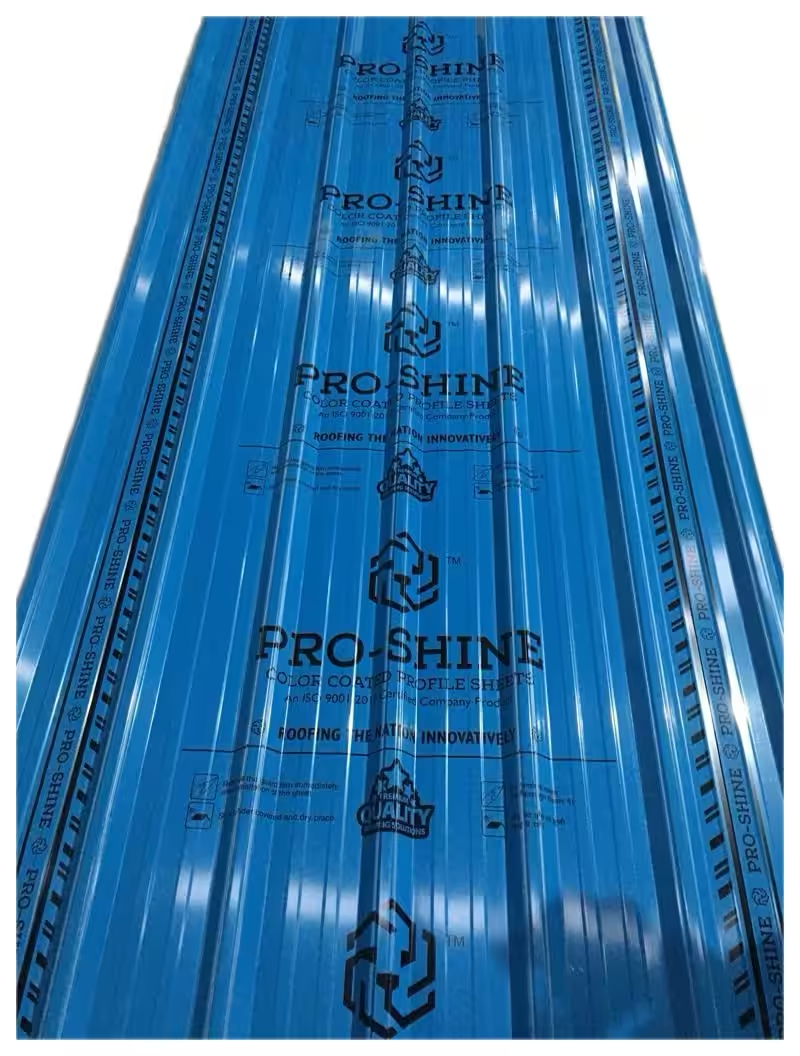
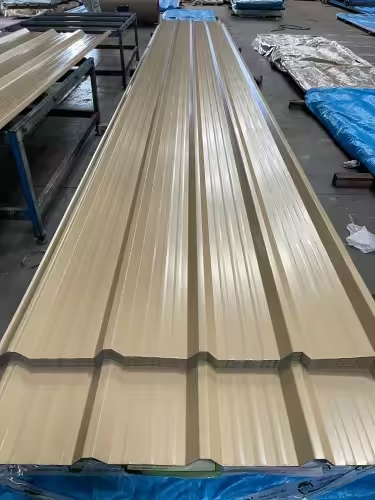
The polymer coating does something that unpainted galvanised steel cannot: it blocks UV radiation before it reaches the zinc layer. In high-sun environments which describes most of India and East Africa through most of the year this matters more than coating thickness alone. UV degradation does not look dramatic until it is, and by then the substrate is already compromised.
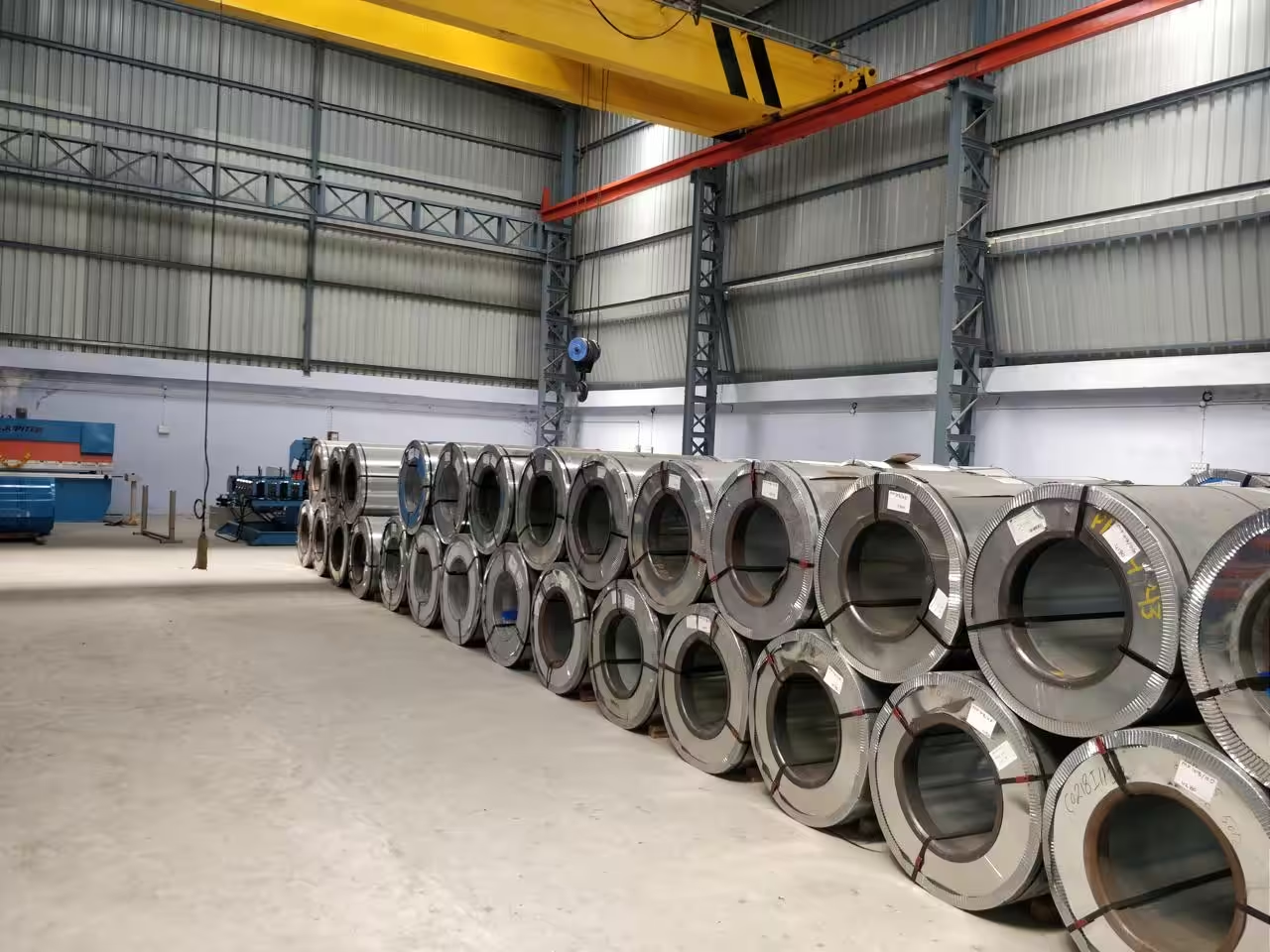
The steel underneath a quality colour coated sheet is high-tensile. The coating protects it; the steel carries the load. For factories, cold storage units, warehouses, and logistics parks, colour coated coils add another operational advantage they can be roll-formed on-site directly into profile, cutting installation time and reducing the number of sheet joints that could eventually leak.
AVREX International, a prominent Roofing Sheet Manufacturer in Gujarat, delivers high-performance roofing solutions designed to support the demanding requirements of industrial infrastructure. As a Roofing Sheet Manufacturer in Gujarat, Avrex International produces colour coated sheets where zinc coating weight and paint adhesion are held to specification across every batch. Thermal cycling the daily expansion and contraction that gradually lifts inferior coatings from the substrate is what ends most colour coated roofs before their time. Consistent manufacturing is the only defence against it.
Galvanised Corrugated Sheets / GC Sheets
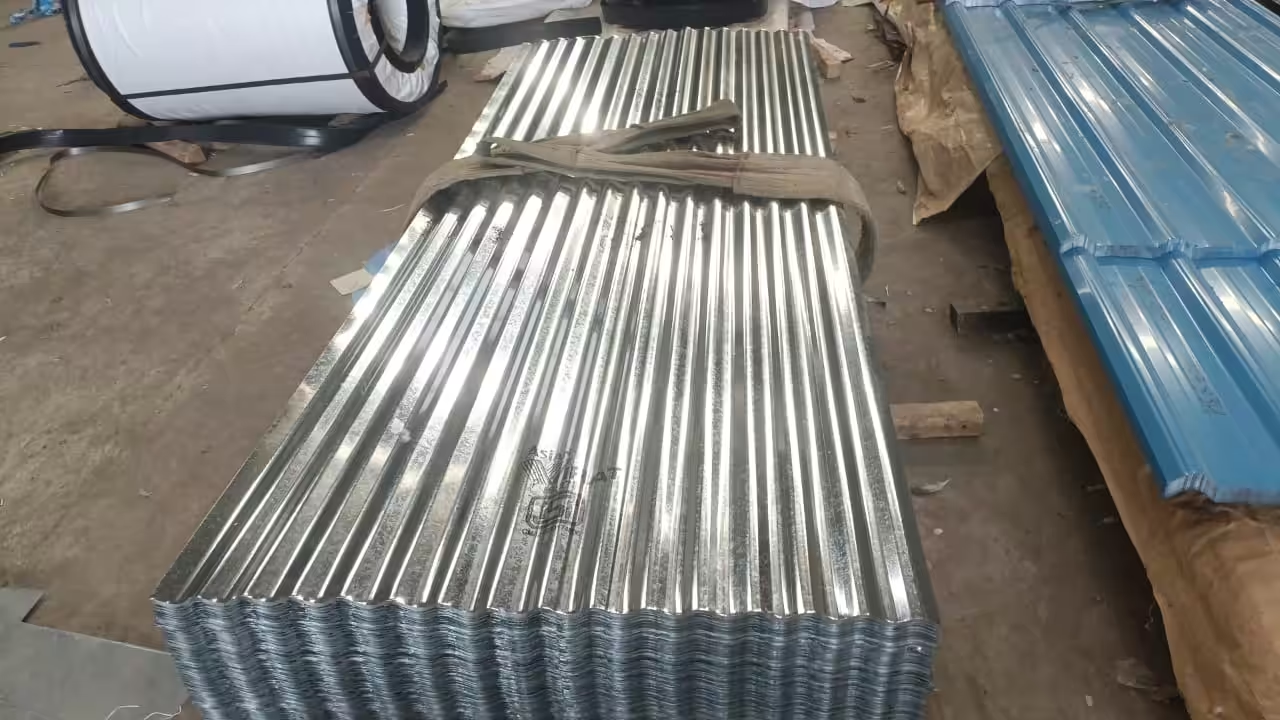
GC sheets have been the industrial roofing standard across South Asia and East Africa for decades. That longevity is earned.
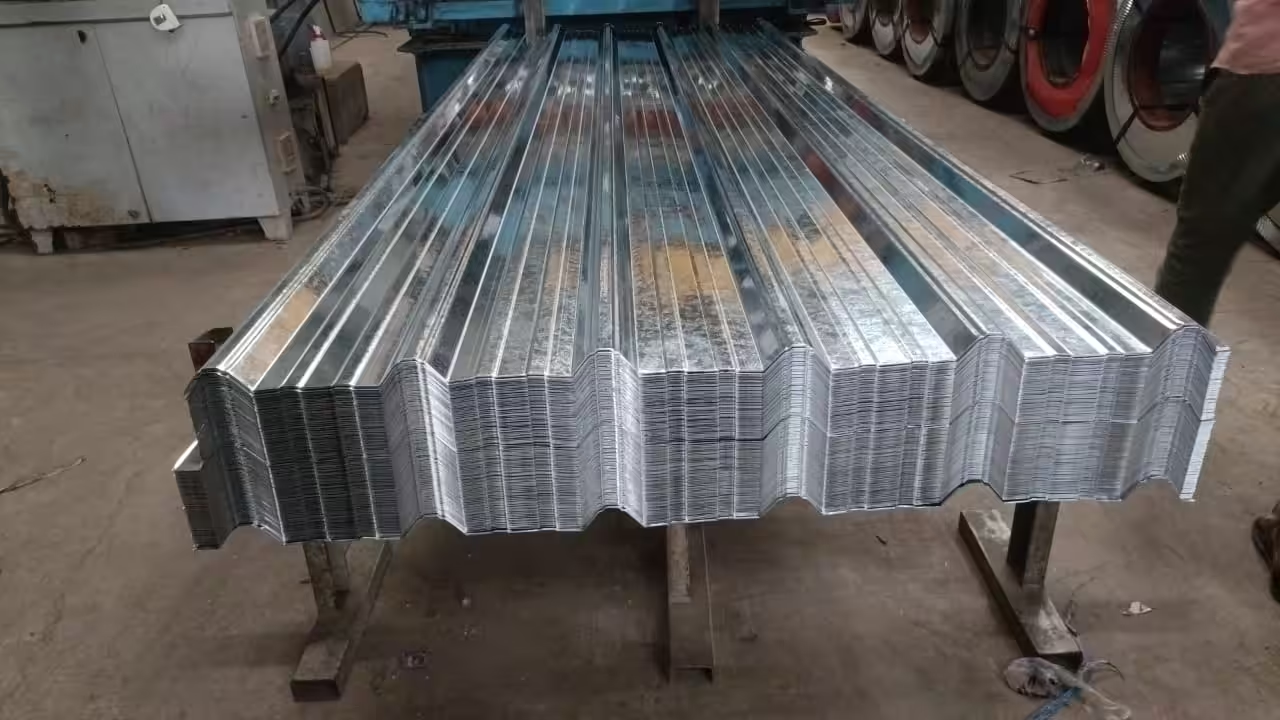
The corrugated profile is structural geometry. Those ridges allow a sheet to span longer purlin distances without deflecting under load something a flat sheet of the same gauge cannot do. It is why GC sheets remain cost-effective at scale: fewer purlins, faster installation, and a proven profile that contractors can work with confidently.
Hot-dip galvanising bonds zinc to steel at a metallurgical level, not as a surface film. That bond does not peel. It does not undercut at scratches the way electroplated coatings can. In environments with wide humidity and temperature swings coastal industrial zones, tropical climates this difference shows up clearly over a ten-year span.
AVREX International is one of the leading Iron Sheet Suppliers in India, providing GC sheets of various gauges, which are used in many applications from agriculture sheds to heavy industrial structures. While buying GC sheets in large quantities, zinc coating weight consistency becomes a critical parameter that impacts the durability and resistance to corrosion of the sheet, especially in its cut edges.
FAQ
Colour coated sheets have a polymer paint layer over a galvanised or galvalume substrate, adding UV protection and a finished appearance. GC sheets are hot-dip galvanised without a paint layer straightforward, cost-effective, and well-suited to industrial applications where aesthetics are not a priority.
With adequate zinc coating 120 to 275 gsm depending on the environment quality GC sheets typically last 20 to 30 years under normal conditions. Coastal, chemical-heavy, or high-humidity environments shorten that range unless higher zinc weights are specified from the outset.
Standard RAL colours are available with most order quantities. Custom colours are possible for larger runs, with lead times that vary based on paint formulation and batch scheduling.
At standard purlin spacing of 1.2m to 1.5m, 0.47mm to 0.55mm gauge is typical. Wider spans or high wind and snow load zones need thicker gauges a structural engineer should confirm the specification before placing a procurement order.
Yes. Avrex International supplies mabati to both markets with full export documentation, quality certifications, and bulk order capacity suited to commercial and industrial construction at scale.
Conclusion
The right roofing sheet does not announce itself. It just works through monsoon seasons, coastal air, and years of thermal cycling without becoming a maintenance issue. Partnering with a reliable Roofing Sheet Supplier in India that manufactures to custom specification is the decision that makes that possible.
Avrex International supplies colour coated sheets and GC sheets to uindstrial clients across India and East Africa, with the traceability and export experience that project-scale procurement demands.
